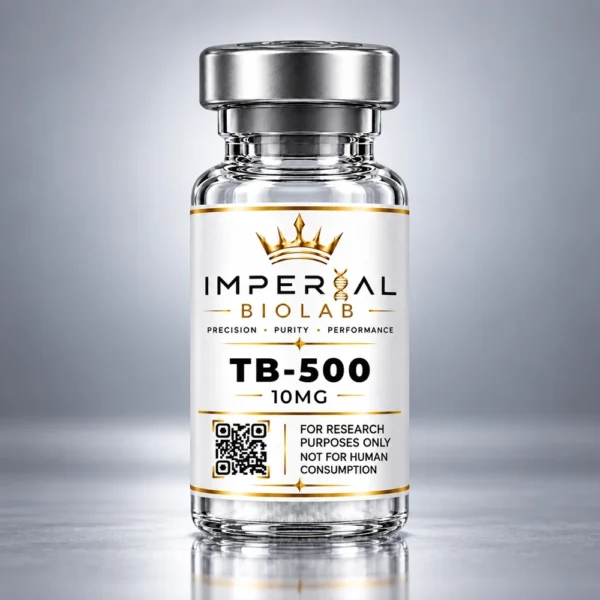
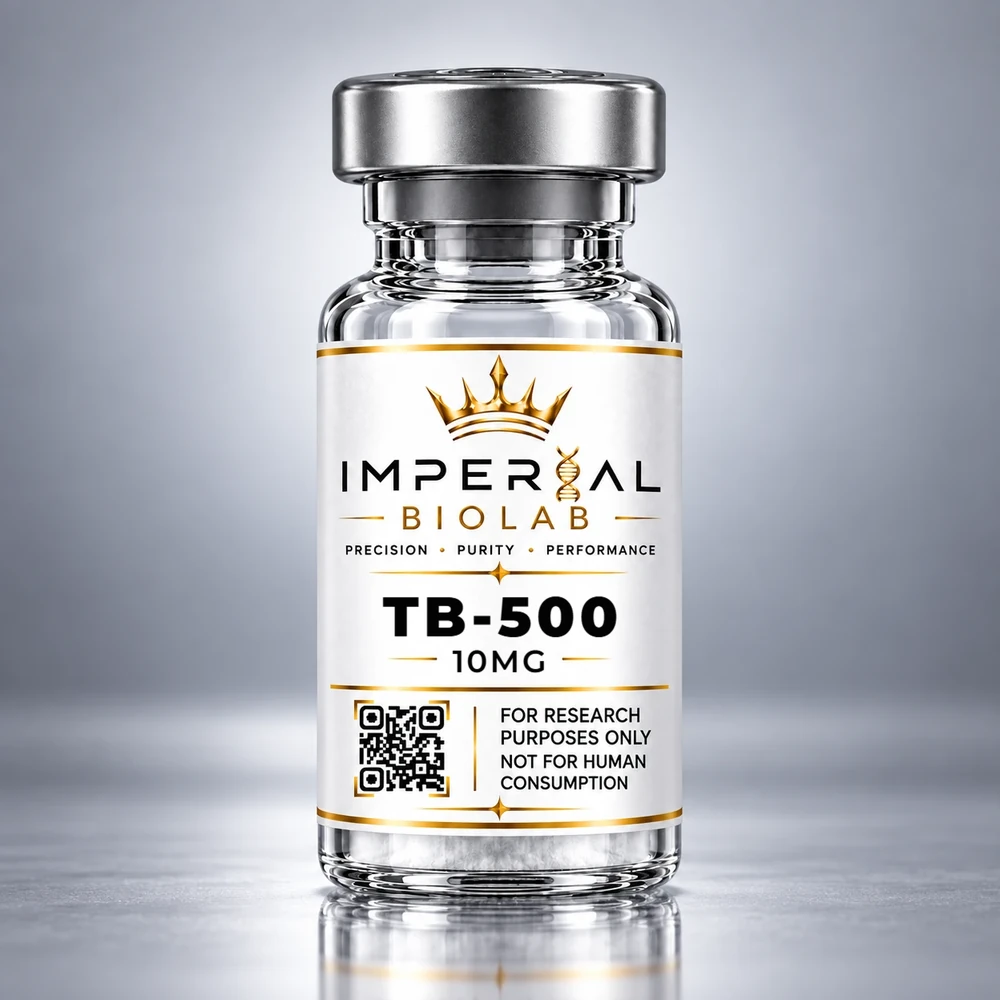
TB-500 10mg
$70.00
TB-500 is a synthetic N-acetylated heptapeptide corresponding to the 17 to 23 region of thymosin beta-4, supplied as a lyophilized powder for in vitro laboratory research. Every batch is independently tested and documented against its own batch number.
- ≥99% purity specification by RP-HPLC
- Identity confirmed by LC-MS, batch specific certificate of analysis
- 10mg lyophilized powder per vial, batch number on every label
What is TB-500?
TB-500 is a synthetic seven residue peptide, Ac-LKKTETQ, supplied as a lyophilized powder for laboratory research. It reproduces residues 17 to 23 of thymosin beta-4, a 43 residue protein, and corresponds to the region of that protein described in the literature as its actin binding motif. TB-500 is a fragment, not the full length protein, and the two should not be confused when reading published work.
TB-500 structure and sequence
The sequence is Ac-Leu-Lys-Lys-Thr-Glu-Thr-Gln, with an acetylated N-terminus, molecular weight 889.0 Da. Two lysine residues and one glutamic acid give the short chain a strongly polar, net positive character, so it is highly water soluble. There are no cysteine or methionine residues, which keeps the oxidation chemistry simple and the mass spectrum unambiguous.
Where this material appears in the literature
Published work on TB-500 and on the parent thymosin beta-4 sequence is preclinical and in vitro. The fragment appears chiefly in studies of actin binding, cell migration and soft tissue models, and in analytical work comparing the fragment with the full length protein. Imperial Biolab supplies the material for that kind of laboratory investigation and makes no claim about what it does in any living subject.
Related material in the catalog
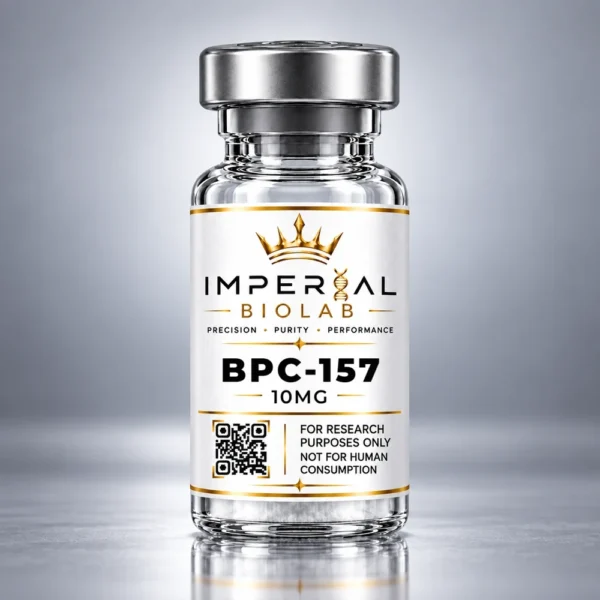
TB-500 sits alongside BPC-157 in the catalog, and both are supplied co-lyophilized with GHK-Cu and KPV as KLOW. The two are structurally unrelated: TB-500 is a seven residue acetylated fragment, while BPC-157 is a 15 residue linear sequence with high proline content.
Analysis and certification
Every batch is analyzed by an independent, accredited US laboratory before release, using RP-HPLC for purity and LC-MS for identity confirmation. The certificate of analysis is published against the batch number rather than against the product page, so the document you read is the document for the vial you receive. The batch number printed on the vial label, and the QR code beside it, are the link between the two.
Purity specification
Batches are released against a ≥99% purity specification, determined by RP-HPLC peak area. A specification is a release threshold, not a description of every batch. The measured figure for the batch you receive is stated on its certificate of analysis and may sit above the specification.
Where a measured figure and the specification differ, the certificate is the record that applies to your material. Analytical figures relate to the batch they are published against and carry no implication of suitability for any purpose beyond laboratory research.
Research use only
Imperial Biolab supplies this material as a reference standard for in vitro laboratory research. It is not supplied for any use in humans or animals, it is not a drug, dietary supplement, food or cosmetic, it has not been evaluated by the FDA, and nothing on this page describes or implies any such use. Sale is restricted to persons aged 21 or over who are qualified researchers or who purchase on behalf of a research institution, laboratory or business.
| Vial Size | 10mg |
|---|
| Compound | TB-500 |
|---|---|
| Also known as | Thymosin beta-4 fragment (17-23), Ac-LKKTETQ |
| Class | Synthetic peptide, acetylated fragment |
| Amino acids | 7 |
| Sequence | Ac-Leu-Lys-Lys-Thr-Glu-Thr-Gln |
| Molecular formula | C38H68N10O14 |
| Molecular weight | 889.0 Da |
| CAS number | 885340-08-9 |
| Appearance | White to off white lyophilized powder |
| Purity specification | ≥99% |
| Purity method | RP-HPLC |
| Identity method | LC-MS |
| Solubility | Freely soluble in sterile water and aqueous buffers for analytical preparation |
| Labeled quantity | 10mg per vial |
Characterization. Values above describe the compound as supplied. The figures for the batch you receive, including measured purity, are stated on its certificate of analysis.
How this material is tested
Two separate analyses are carried out on every batch before release, and both appear on the certificate.
- RP-HPLC, for purity. Reversed phase high performance liquid chromatography separates the material by hydrophobicity. The main peak is integrated against total peak area, and that ratio is the purity figure reported on the certificate.
- LC-MS, for identity. Liquid chromatography coupled to mass spectrometry confirms that the mass of the main peak matches the expected mass for the compound, which is what distinguishes the correct sequence from a closely related one.
A complete certificate carries the compound name, the batch number, the test date, the method, the measured purity and the name of the laboratory. If any of those is missing, or the batch number on the vial does not match the certificate, contact us before using the material.
Storing TB-500
Stock is held at −20°C until picking and ships in insulated packaging. Move the vial into freezer storage on arrival and keep it sealed, dry, at −20°C or below, protected from light and moisture. Returned promptly to those conditions, the dry solid is the most stable form this material takes.
Preparing stock solutions
Prepare stock solutions in sterile water or an appropriate aqueous buffer at a concentration suited to your assay, expressed in mg/mL. Allow the vial to reach room temperature before opening, add solvent down the vial wall rather than directly onto the solid, and let the material dissolve without vigorous agitation. TB-500 is short and highly polar, and dissolves readily in water at the concentrations used for analytical work.
Solutions are less stable than the lyophilized solid. Prepare close to the point of use, hold at 2 to 8°C for short periods only, and aliquot before freezing so that repeated freeze and thaw cycles are avoided.
On arrival
Check that the vial is intact and sealed, that the compound name and labeled quantity match your order, and that the batch number on the label matches the certificate published for it. If anything does not match, or the packaging has clearly failed in transit, contact us before using the material. Problems visible on arrival should be reported within 7 days of delivery, with photos of the packaging and the batch label, so that a carrier claim remains possible.
Handling and disposal
Assess the hazards of this material before handling it and use appropriate controls and protective equipment. It has not been characterized toxicologically and should be treated as potentially hazardous. Anyone handling it should be trained for the work.
Dispose of unused material, vials and packaging lawfully and in line with your institution's waste procedures.
Record keeping
Record the batch number in your notes at the point of first use, alongside the date the vial was opened and the concentration of any stock prepared. Certificates are published against the batch number rather than the product, so the batch number is the only reliable link between your results and the analytical data for the material that produced them. If a question arises about a result months later, that link is what keeps the work auditable.
Which certificate of analysis applies to my vial?
The certificate published against the batch number printed on your vial label. Scan the QR code on the label, or look the batch number up in the COA library. The certificate stays online after a batch sells out, so the record remains available for your notes.
What purity specification does TB-500 meet?
Every batch is released against a ≥99% purity specification by RP-HPLC, with identity confirmed by LC-MS at an independent, accredited US laboratory. The measured purity for your batch is stated on its certificate and may sit above the specification.
Is TB-500 the same as thymosin beta-4?
No. TB-500 is a synthetic seven residue fragment, Ac-LKKTETQ, corresponding to residues 17 to 23 of thymosin beta-4. Thymosin beta-4 itself is a 43 residue protein with a molecular weight of roughly 4.9 kDa. The LC-MS identity result on the certificate confirms the fragment mass of 889.0 Da.
How is TB-500 shipped?
Stock is held at −20°C until picking and packed insulated in plain outer packaging, with no compound names on the box. Orders placed before 2pm Eastern on a business day are dispatched the same day, tracked to all 50 states. We ship to US addresses only.
How should the vial be stored once it arrives?
Move it into freezer storage on arrival: sealed, dry, at −20°C or below, and protected from light. The Storage and handling tab covers stock solution preparation and record keeping.
Is TB-500 suitable for use in humans or animals?
No. TB-500 is supplied strictly for in vitro laboratory research by qualified persons aged 21 or over. It is not a drug, dietary supplement, food or cosmetic, has not been evaluated by the FDA, and we do not provide guidance on any use outside the laboratory.
Looking for something else?
Tell us the compound and quantity you are looking for and we will confirm availability and lead time. Research use only.
Contact Us